1963 25th February
Oswald Lawyer
Dean Andrews told the FBI that someone using the name Clay Bertrand telephoned him on the assassination day and asked whether he would represent Lee Harvey Oswald.
JFK assassination · permanent subject timeline
President Kennedy, the Dallas visit and the events of 22 November 1963. This page combines historical context with 200 matching records drawn directly from the Kennedy Assassination History archive.
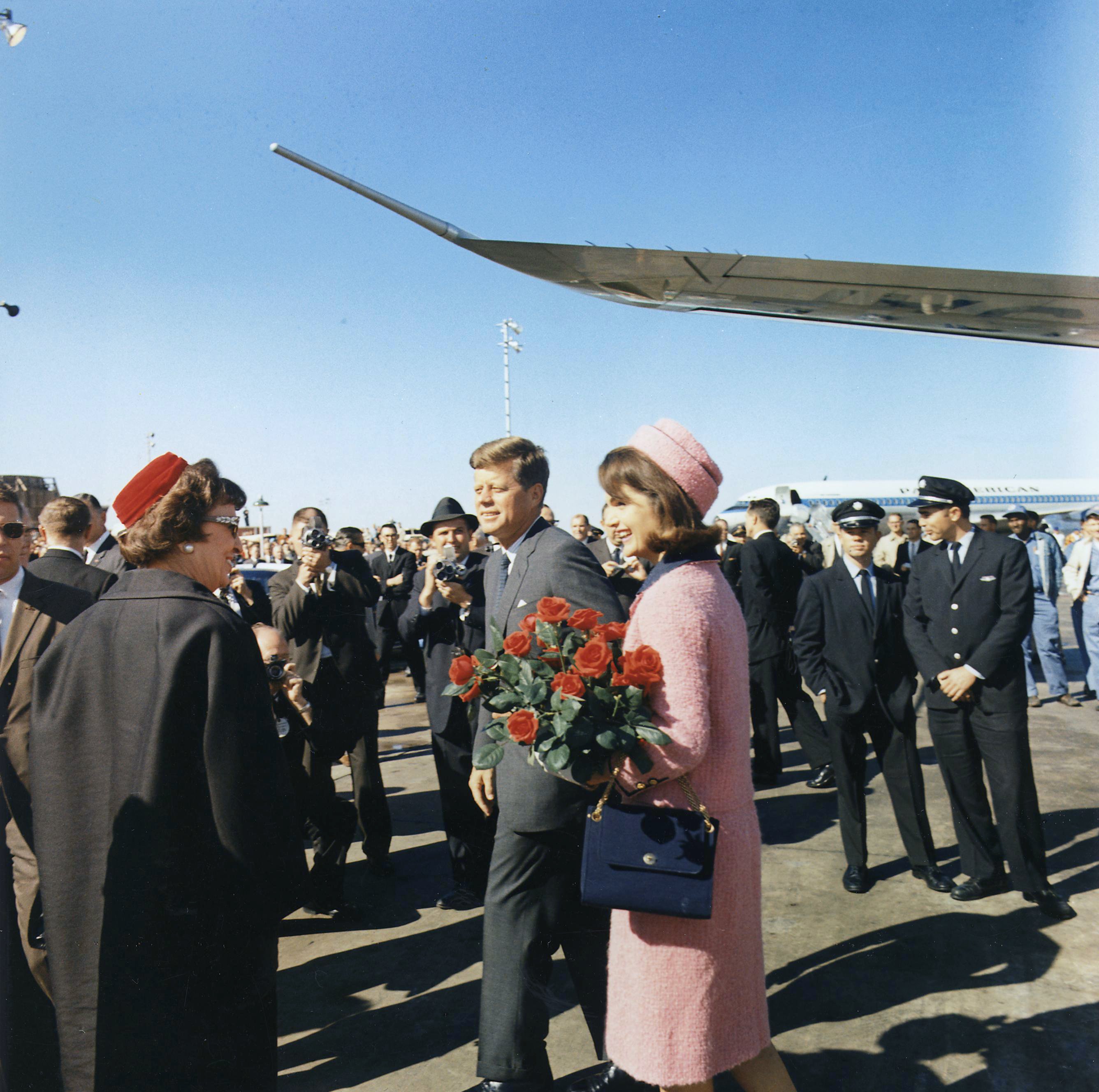
Historical context
President John F. Kennedy travelled to Texas in November 1963 as part of a political trip that included stops in San Antonio, Houston, Fort Worth and Dallas. On 22 November his motorcade passed through Dealey Plaza, where he was shot and mortally wounded before being taken to Parkland Memorial Hospital.
Kennedy's death abruptly transferred the presidency to Lyndon B. Johnson and created a national crisis whose political, evidential and cultural consequences have continued for decades. The records connect the Dallas visit to the immediate investigation and later official inquiries.
Archive records
The records below are selected from the 1,932-record JFK assassination archive and are rendered as static HTML in chronological order.
Oswald Lawyer
Dean Andrews told the FBI that someone using the name Clay Bertrand telephoned him on the assassination day and asked whether he would represent Lee Harvey Oswald.
Motorcade Route
The motorcade route is published is published in both Dallas newspapers. The motorcade route is described in both Dallas newspapers..
Assassination of John Fitzgerald Kennedy
At 1:00 p.m., CST (19:00 UTC), after all heart activity had ceased and after a priest administered the last rites, the President is pronounced dead..
Carousel Rent Payment
On November 21, Ruby paid the rent for the Carousel Club premises while conducting routine business before President Kennedy arrived in Dallas.
Death Certificate
Dr. Burkley signs President Kennedys death certificate..
Houston Visit
Jacqueline Kennedy accompanied President Kennedy to Houston during the Texas trip and attended public events before the party continued to Fort Worth.
Texas Political Trip Departure
Jacqueline Kennedy accompanied President Kennedy when he left Washington on November 21, 1963, for a two-day political trip through Texas.
Alice Nichols Telephone Call
Ruby spoke by telephone with former girlfriend Alice Nichols on November 22 and expressed shock over President Kennedy's assassination.
Andrews Air Force Base Arrival
Johnson arrived at Andrews Air Force Base aboard Air Force One after the flight from Dallas following President Kennedy's assassination.
Andrews Air Force Base Arrival
Jacqueline Kennedy arrived at Andrews Air Force Base late on November 22 with President Kennedy's casket.
Assassination of John Fitzgerald Kennedy
At Zapruder frame 313, when President Kennedy was shot in the head, Jean Hill was only 21 feet (6.4 m) away, leftward, and slightly behind President Kennedy.
Assassination of John Fitzgerald Kennedy
Norma Jean Lollis Hill was present along with her friend Mary Moorman across from the grassy knoll, and was one of the very closest witnesses to President Kennedy when the shots were fired at him.
Assassination of John Fitzgerald Kennedy
After Air Force One lands at Andrews Air Force Base, just outside Washington, D.C., Kennedys body is taken to Bethesda Naval Hospital for an immediate autopsy..
Assassination of John Fitzgerald Kennedy
At 1:00 p.m., CST (19:00 UTC), after all heart activity had ceased and after a priest administered the last rites, the President is pronounced dead... Assassinated while on a Presidential campaign
Assassination of John Fitzgerald Kennedy
A few minutes after 2:00 p.m. CST (20:00 UTC), and after a confrontation between Dallas police and Secret Service agents, Kennedys body is placed in a casket and taken from Parkland Hospital and driven to Air Force One....
Autopsy
After Air Force One lands at Andrews Air Force Base, just outside Washington, D.C., Kennedys body is taken to Bethesda Naval Hospital for an immediate autopsy..
Autopsy
The body is removed before a forensic examination can be conducted by the Dallas County coroner, which violated Texas state law (the murder was a state crime, and occurred under Texas legal jurisdiction)..
Badge Man
The Warren Commission later concludes that Lee Harvey Oswald is the lone assassin..
Badge Man
Badge Man is the name given to a photographic image that some President John F. Kennedy assassination researchers claim is a grassy knoll assassin seen within a Polaroid photograph that close witness Mary Moorman captured..
Badge Man
The photo has been calculated to have been captured between the Zapruder film equivalent concurrent frames of Z-315 and 316 (less than one-sixth of a second after President Kennedys head first exploded at Z-313).
Bethesda Autopsy Assistance
Commander J. Thornton Boswell assisted Humes and Finck during President Kennedy's autopsy at Bethesda Naval Hospital.
Bethesda Autopsy Completion
The autopsy of President Kennedy was concluded at approximately 11 p.m. at Bethesda Naval Hospital.
Bethesda Autopsy Hospital Selection
Jacqueline Kennedy chose the National Naval Medical Center at Bethesda for the autopsy because President Kennedy had served in the Navy.
Bethesda Autopsy Photography
Photographs of President Kennedy were taken at Bethesda as part of the preliminary autopsy documentation.
Bethesda Burial Preparation Begins
After the autopsy ended, President Kennedy's body was prepared for burial at Bethesda Naval Hospital.
Bethesda Casket Arrival
President Kennedy's body arrived at Bethesda Naval Hospital for autopsy at approximately 7:35 p.m.
Bethesda Chief Autopsy Surgeon
Commander James J. Humes served as chief autopsy surgeon during the examination of President Kennedy at Bethesda Naval Hospital.
Bethesda Chief of Pathology Role
Boswell was chief of pathology at Bethesda Naval Hospital when he participated in President Kennedy's autopsy.
Bethesda Cranial Fragments Recovered
Two small irregular metallic fragments were recovered from Kennedy's head during the Bethesda autopsy and transferred to the FBI.
Bethesda Cranial Metal Fragment Pattern
X-rays showed numerous tiny metal fragments extending from the rear head wound toward the front of Kennedy's skull.
Bethesda Fragment Above Right Eye
The Bethesda X-rays showed a sizable metallic fragment positioned above President Kennedy's right eye.
Bethesda Intermuscular Bullet Track
The autopsy found that the neck bullet passed between two large muscles without leaving a permanent channel through either muscle.
Bethesda Neck Track Misses Bone
The Bethesda pathologists found that the bullet passing through Kennedy's neck did not strike any bone.
Bethesda Neck Wound Measurements
The posterior neck wound measured approximately seven by four millimeters and had clean, sharply defined edges.
Bethesda Pathological Cause of Death
The Bethesda autopsy report listed the pathological cause of President Kennedy's death as a gunshot wound to the head.
Bethesda Pathological Examination Begins
The pathological examination of President Kennedy began at Bethesda at about 8 p.m. on November 22.
Bethesda Physical Measurements
The autopsy report recorded Kennedy as 46 years old, 72.5 inches tall, approximately 170 pounds, with blue eyes and reddish-brown hair.
Bethesda Pleural Contusion
The neck bullet produced a contusion on the upper part of Kennedy's pleural cavity without penetrating that cavity.
Bethesda Posterior Neck Wound
The autopsy revealed another bullet wound near the base of Kennedy's neck, slightly to the right of his spine.
Bethesda Posterior Skull Entrance
The autopsy identified a small wound in the rear of Kennedy's skull as a bullet entrance wound.
Bethesda Preliminary X-Rays
Preliminary X-rays of President Kennedy were taken at Bethesda before the pathological examination began.
Bethesda Right Lung Apex Bruising
The Bethesda examination found bruising at the top portion of President Kennedy's right lung along the neck bullet's path.
Bethesda Right Skull Exit Defect
The pathologists identified the large defect on the upper right side of Kennedy's skull as the head bullet's exit area.
Bethesda Skull Fragment Reconstruction
Recovered skull fragments were fitted together during the Bethesda examination, accounting for much of the missing portion of Kennedy's skull.
Bethesda Tracheal Injury
The examining pathologists concluded that the neck bullet damaged Kennedy's trachea as it passed through his neck.
Bethesda Tracheotomy Obscures Exit
The front neck wound could not be directly examined because the Parkland tracheotomy incision had removed visible evidence of that wound.
Cardiac Monitoring
Helped connect the cardioscope used during President Kennedy's resuscitation.
Cardioscope Connection
Helped connect the cardioscope used to monitor President Kennedy's cardiac activity.
Closed Chest Cardiac Massage
Performed manual closed-chest cardiac compression during the effort to maintain President Kennedy's circulation.
Dallas Motorcade
Johnson traveled in the Dallas presidential motorcade behind President Kennedy's limousine when shots were fired in Dealey Plaza.
Death of John Fitzgerald Kennedy
At 1:00 p.m., CST (19:00 UTC), after all heart activity had ceased and after a priest administered the last rites, the President is pronounced dead... A few minutes after 2:00 p.m. CST (20:00 UTC), and after a confrontation between Dallas police and Secret Service agents, Kennedys body is placed in a casket and taken from Parkland Hospital and driven to Air Force One....
Departure from Dallas
After Johnson completed the presidential oath, Air Force One departed Dallas carrying the new President, the Kennedy party, and President Kennedy's casket.
Downtown Emergency Broadcast
At about 12:44 p.m., Dallas police radio ordered downtown patrol units to report to Elm and Houston under emergency conditions after President Kennedy was shot.
Dual Parkland Treatment Role
Robert Nelson McClelland participated in the emergency treatment of President Kennedy and later in operative treatment of Governor Connally at Parkland.
Emergency Notification
Charles James Carrico was working in the emergency area when notified that President Kennedy was being brought to Parkland Hospital.
Emergency Tracheotomy
Malcolm Oliver Perry performed an emergency tracheotomy to establish an effective airway for President Kennedy.
First Parkland Physician
Charles James Carrico was the first physician to see President Kennedy at Parkland Hospital after the motorcade arrived.
Fort Worth Breakfast Appearance
Mrs. Kennedy joined President Kennedy at the Fort Worth Chamber of Commerce breakfast before the presidential party departed for Dallas.
Grassy Knoll
The "Lady in Red" in Zapruders film, claims smoke was lingering near the grassy knoll picket fence corner. Present along with her friend Mary Moorman across from the grassy knoll, and was one of the very closest witnesses to President Kennedy when the shots were fired at him
Grassy Knoll
Badge Man is the name given to a photographic image that some President John F. Kennedy assassination researchers claim is a grassy knoll assassin seen within a Polaroid photograph that close witness Mary Moorman captured...
House Select Committee on Assassinations (HSCA)
Gonzalez was in President Kennedy's motorcade, he recalled rolling down the window as his car neared the Texas School Book Depository, then hearing three shots during the assassination.
House Select Committee on Assassinations (HSCA)
Kennedy, and President Kennedy's sheet covered body. Gonzalez helped place Kennedy's casket in the hearse that transported Kennedy to Air Force One
Hydrocortisone Administration
Administered hydrocortisone because of President Kennedy's known adrenal insufficiency.
Initial Life Assessment
Charles James Carrico concluded from the initial examination that President Kennedy was still alive when he arrived at Parkland Hospital.
Jacqueline Kennedy at Oath
Johnson asked Jacqueline Kennedy to be present for the presidential oath after she arrived aboard Air Force One with President Kennedy's casket.
Jacqueline Kennedy Departure Request
Tried to persuade Jacqueline Kennedy to leave the Parkland treatment area after President Kennedy had been pronounced dead.
Jenkins Resuscitation Report
Received Marion Jenkins's same-day written statement describing the resuscitative efforts for President Kennedy.
Kennedy Death Notification at Parkland
Lyndon Baines Johnson was informed at approximately 1:20 p.m. while at Parkland Hospital that President Kennedy was dead.
Kennedy Murder Charge
Later on November 22, Dallas authorities charged Oswald with murdering President John F. Kennedy.
Kennedy Murder Complaint Signed
After reviewing the developing evidence with prosecutors, Fritz signed the complaint charging Oswald with murdering President Kennedy at 11:26 p.m.
Kennedy Shooting Report Received
After learning that President Kennedy had been shot, Hosty returned toward the Dallas FBI office to await instructions.
Kennedy Stretcher Transfer
William R. Greer helped lift President Kennedy from the presidential limousine onto the Parkland stretcher.
Kennedy Stretcher Transfer
Roy H. Kellerman helped lift President Kennedy from the limousine onto a stretcher for movement into Parkland trauma room 1.
Kennedy Stretcher Transfer
Winston G. Lawson helped Roy Kellerman and William Greer lift President Kennedy onto a stretcher and move him into trauma room 1.
Left Arm Cutdown
Performed a cutdown on President Kennedy's left arm to permit infusion of blood and fluids.
Lone Assassin
The Warren Commission later concludes that Lee Harvey Oswald is the lone assassin..
Motorcade Viewing
Truly went outside the Texas School Book Depository to watch President Kennedy's motorcade pass through Dealey Plaza.
No Established Dallas Presence
Later official investigations did not establish that Sturgis was present in Dealey Plaza when President Kennedy was assassinated.
No Warren Commission Identification
The Warren Commission did not identify Sturgis as a participant in President Kennedy's assassination or as one of the men detained near Dealey Plaza.
Oral Surgery Emergency Response
Don Teel Curtis responded to the Parkland emergency area as an oral surgeon after notice that President Kennedy was en route.
Parkland Administration
Charles Jack Price served as administrator of Parkland Memorial Hospital during the emergency treatment of President Kennedy and Governor Connally.
Parkland Casket Departure
Jacqueline Kennedy accompanied President Kennedy's casket when it was taken from Parkland Memorial Hospital for the return to Love Field.
Parkland Memorial Hospital
Johnson remained under Secret Service protection at Parkland Memorial Hospital while President Kennedy was treated after the shooting.
Parkland Memorial Hospital
At 1:00 p.m., CST (19:00 UTC), after all heart activity had ceased and after a priest administered the last rites, the President is pronounced dead... A few minutes after 2:00 p.m.
Parkland Memorial Hospital
CST (20:00 UTC), and after a confrontation between Dallas police and Secret Service agents, Kennedys body is placed in a casket and taken from Parkland Hospital and driven to Air Force One..
Parkland Memorial Hospital
Oscar L Huber was the Very Rev. Oscar L. Huber, the priest who administered the last rites to Kennedy told The New York Times that the President was already dead by the time he had arrived at the hospital..
President Kennedy Head Wound
Jacqueline Kennedy was beside the President when the fatal shot struck his head during the motorcade through Dealey Plaza.
Presidential Limousine Rear Seat
Jacqueline Kennedy sat beside President Kennedy in the rear seat of the presidential limousine during the Dallas motorcade.
Presidential Succession
Following President Kennedy's death, Johnson became President under constitutional succession and prepared to take the presidential oath before leaving Dallas.
Pronouncement of Death
William Kemp Clark pronounced President Kennedy dead at approximately 1:00 p.m. at Parkland Hospital.
Refusal to Leave Parkland
After President Kennedy was pronounced dead, Mrs. Kennedy initially refused efforts to persuade her to leave the hospital area.
Right Chest Tube Assistance
Assisted with insertion of a right chest tube during President Kennedy's resuscitation.
Shots Heard in Dealey Plaza
Truly was outside the Depository when the shots were fired at President Kennedy and immediately reacted to the emergency.
Stat Alarm Response
Marion Thomas Jenkins responded immediately after receiving the stat alarm that President Kennedy was being brought to Parkland Hospital.
Texas Political Trip
Vice President Lyndon Baines Johnson joined President Kennedy in Dallas during a Texas political trip intended to build support and reduce divisions ahead of the 1964 election.
Tracheotomy Assistance
Entered trauma room 1 during resuscitation and assisted Malcolm Perry with President Kennedy's tracheotomy.
Trauma Room Leadership
Assumed direction of President Kennedy's treatment shortly after arriving in trauma room 1.
Trauma Room One Response
Charles Rufus Baxter arrived with Malcolm Perry and Robert McClelland during the emergency treatment of President Kennedy.
Trauma Room Two Care
Remained with Governor Connally in trauma room 2 when Charles Carrico left to help treat President Kennedy.
Warren Commission
The Warren Commission later concludes that Lee Harvey Oswald is the lone assassin..
Bethesda Burial Preparation Completed
Preparation of President Kennedy's body for burial was completed at approximately 4 a.m. on November 23.
Bethesda Departure for White House
After the burial preparation was completed, President Kennedy's body left Bethesda for the White House East Room.
East Room Lying in Repose
President Kennedy's casket lay in repose in the White House East Room while Jacqueline Kennedy and the family observed private mourning rites.
Heroism Radio Script
After leaving KLIF, Ruby showed reporter Russ Knight a "Life Line" radio script titled "Heroism" and discussed political hostility toward President Kennedy in Dallas.
Lincoln Funeral Precedent
Mrs. Kennedy looked to Abraham Lincoln's funeral for precedent when shaping the ceremonial arrangements for President Kennedy's state funeral.
Capitol Procession
Mrs. Kennedy accompanied the Kennedy family during ceremonies transferring President Kennedy's casket from the White House to the United States Capitol.
Capitol Rotunda Ceremony
Jacqueline Kennedy attended the ceremony as President Kennedy's casket was placed in the Capitol Rotunda to lie in state.
Pago Club Visit
After midnight, Ruby visited the Pago Club, ordered a Coke, and questioned why the establishment remained open while the city mourned President Kennedy.
Arlington Burial Ceremony
Jacqueline Kennedy attended the graveside military ceremony at Arlington National Cemetery as President Kennedy was laid to rest.
Burial
Representatives from over 90 countries, including the Soviet Union, attend the funeral, after the service, the casket is taken by caisson to Arlington National Cemetery for burial..
Eternal Flame Lighting
Jacqueline Kennedy lit the eternal flame at President Kennedy's grave at approximately 3:15 p.m. on November 25.
Funeral Day White House Departure
On November 25, Jacqueline Kennedy left the White House for the final funeral procession honoring President Kennedy.
John Kennedy Jr Funeral Salute
Jacqueline Kennedy stood with her children during the funeral ceremonies when John F. Kennedy Jr. saluted his father's passing casket.
Kennedy Funeral Reception
Johnson received foreign leaders in Washington during diplomatic events and receptions associated with President Kennedy's funeral.
Procession to Arlington
Mrs. Kennedy accompanied the funeral procession from Washington to Arlington National Cemetery for President Kennedy's burial.
St Matthews Requiem Mass
Mrs. Kennedy attended the Requiem Mass for President Kennedy at St. Matthew's Cathedral with her children, family members, and international dignitaries.
Let Us Continue
Johnson used the phrase "let us continue" to frame his commitment to carry forward the national program begun under President Kennedy.
Chairman
Earl Warren chairs the presidential commission investigating the assassination of John F. Kennedy.
Commission Chairmanship
Warren became chairman of the President's Commission on the Assassination of President Kennedy when the commission was established by Executive Order 11130.
Commission Establishment
Establishes the President's Commission on the Assassination of President Kennedy, known as the Warren Commission.
Earl Warren Appointment
Johnson appointed Chief Justice Earl Warren to chair the commission investigating President Kennedy's assassination.
Warren Commission
Johnson created the President's Commission on the Assassination of President Kennedy to investigate the killing and report its conclusions to him.
Warren Commission Appointment
President Lyndon B. Johnson appointed Chief Justice Earl Warren to chair the commission investigating President Kennedy's assassination.
Anti-Castro Activity Before Assassination
Federal records place Sturgis in the anti-Castro milieu during the period immediately preceding President Kennedy's assassination.
Second Floor Encounter Statement
Truly gave investigators an account of the second-floor encounter involving Baker and Oswald shortly after President Kennedy was shot.
FBI Evidence Review
Warren's commission began reviewing investigative reports supplied by the FBI concerning President Kennedy's assassination, Lee Harvey Oswald, and related evidence.
Oswald Lawyer
A Secret Service report stated that Oswald visited Dean Andrews’s office about three times in June and July 1963 seeking legal advice.
Assassination of John Fitzgerald Kennedy
Representatives from over 90 countries, including the Soviet Union, attend the funeral, after the service, the casket is taken by caisson to Arlington National Cemetery for burial..
Assassination of John Fitzgerald Kennedy
The Magic Bullet theory is contributed to the Warren Commission by Arlen Specter posits that a single bullet, "Warren Commission Exhibit 399", caused all of the non-fatal wounds in both President Kennedy and Texas Governor John Connally
Exhibit 399
Posits that a single bullet, known as "Warren Commission Exhibit 399" (also known as "CE399"), caused all of the non-fatal wounds in both President Kennedy and Texas Governor John Connally
Lady In Red
Hill apparently always thought of herself as a survivor after many of the other witnesses to the assassination died shortly after President Kennedys death under what some considered to be mysterious circumstances.
Magic Bullet
Posits that a single bullet, known as "Warren Commission Exhibit 399" (also known as "CE399"), caused all of the non-fatal wounds in both President Kennedy and Texas Governor John Connally. A one-inch-long copper-jacketed lead-core 6.5-millimeter rifle bullet fired from the sixth floor of the Texas School Book Depository passed through Kennedys neck and Connallys chest wrist and embedded itself in the Governors thigh..
Magic Bullet
The Magic Bullet theory is contributed to the Warren Commission by Arlen Specter posits that a single bullet, "Warren Commission Exhibit 399", caused all of the non-fatal wounds in both President Kennedy and Texas Governor John Connally.
Autopsy Evidence Review
Warren's commission reviewed the autopsy findings, Parkland Hospital evidence, medical testimony, and related material concerning President Kennedy's wounds.
No Oswald Interview Testimony
Hosty testified that he had never interviewed Oswald before President Kennedy's assassination.
Revill Statement Denied Under Oath
Hosty denied Revill's allegation that he had said the FBI knew Oswald was capable of assassinating President Kennedy.
Warren Commission Testimony
McCone testified before the Warren Commission about CIA information relevant to Lee Harvey Oswald and possible foreign involvement in President Kennedy's assassination.
Right-Wing Activity Inquiry
Warren's commission examined hostile right-wing political activity in Dallas and investigated whether it had any connection to President Kennedy's assassination.
Warren Commission
According to a December 1963 Secret Service report, Dean Andrews said Oswald visited his office about three times in June and July seeking advice about citizenship and his wife’s status.
FPCC Assassination Link Finding
The Commission concluded that Oswald's Fair Play for Cuba Committee contacts were not shown to be related to the assassination of President Kennedy.
Warren Commission
Johnson receives the Warren Commission report on the assassination of President Kennedy.
Warren Commission
The 889-page final report is presented to President Johnson on September 24, 1964. President Johnson demanded in the name of patriotic duty that Warren head the governmental commission that investigated the assassination of John F. Kennedy.
Warren Report Submission
Johnson received the Warren Commission's final report on September 24, 1964, after the commission completed its investigation of President Kennedy's assassination.
Warren Commission
The Warren Report is made public.
House Select Committee on Assassinations (HSCA)
The HSCA Report in 1979 agrees with the Warren Report's conclusion that two bullets caused all of President Kennedy's and Governor Connally's injuries
Lone Gunman Theory
Lone gunman theory, name given to the conclusion reached by the Warren Commission that President John F. Kennedy was assassinated by a single gunman named Lee Harvey Oswald who fired only three shots..
Texas School Book Depository
The HSCA Report in 1979 agrees with the Warren Report's conclusion that two bullets caused all of President Kennedy's and Governor Connallys injuries, The HSCA also concluded that both bullets were fired by Oswald from the sixth floor of the Texas School Book Depository.
Warren Commission
Lone gunman theory, name given to the conclusion reached by the Warren Commission that President John F. Kennedy was assassinated by a single gunman named Lee Harvey Oswald who fired only three shots...
Warren Commission
The HSCA Report in 1979 agrees with the Warren Report's conclusion that two bullets caused all of President Kennedy's and Governor Connally's injuries, The HSCA also concluded that both bullets were fired by Oswald from the sixth floor of the Texas School Book Depository..
Autopsy Evidence
Pierre A Finck testifies about his participation in the autopsy of President Kennedy at Bethesda Naval Hospital.
Autopsy Evidence
Gives medical evidence concerning President Kennedy's autopsy and the wounds considered by the Commission.
Testimony
The witness testified to the Warren Commission that one or more shots came from the grassy knoll.. Paul Landis was a Secret Service agent in the car immediately behind President Kennedy's car. My reaction at this time was that the [fatal] shot came from somewhere towards the front
Russo Preliminary Hearing Testimony
At the preliminary hearing, Perry Russo testified that Shaw, Oswald, and Ferrie had participated in a discussion about killing President Kennedy.
Orleans Parish Grand Jury Indictment
The Orleans Parish grand jury indicted Shaw for conspiracy to murder President Kennedy on March 22, 1967.
Investigation
New Orleans D.A. Jim Garrison began an investigation into the assassination of President Kennedy in the fall of 1966, after receiving several tips from Jack Martin that a man named David Ferrie may have been involved in the assassination..
Investigation
New Orleans D.A. Jim Garrison began an investigation into the assassination of President Kennedy in the fall of 1966, after receiving several tips from Jack Martin that a man named David Ferrie may have been involved in the assassination..
Investigation
New Orleans D.A. Jim Garrison began an investigation into the assassination of President Kennedy in the fall of 1966, after receiving several tips from Jack Martin that a man named David Ferrie may have been involved in the assassination..
Trial
During the trial, Russo testified that he had attended an "assassination party" at David Ferries apartment, where Shaw, Ferrie, and Lee Harvey Oswald had discussed killing President Kennedy.
Trial
The conversation included plans for the "triangulation of crossfire" and alibis for the participants. Russo claimed in September, 1963, he overheard Shaw and David Ferrie discussing the proposed assassination of John F. Kennedy.
Trial
Russo claimed in September, 1963, he overheard Shaw and David Ferrie discussing the proposed assassination of John F. Kennedy. During the trial, Russo testified that he had attended an "assassination party" at David Ferries apartment, where Shaw, Ferrie, and Lee Harvey Oswald had discussed killing President Kennedy
Trial
During the trial, Russo testified that he had attended an "assassination party" at David Ferries apartment, where Shaw, Ferrie, and Lee Harvey Oswald had discussed killing President Kennedy
Trial
Russo claimed in September, 1963, he overheard Shaw and David Ferrie discussing the proposed assassination of John F. Kennedy.
Trial
This record states: During the trial, Russo testified that he had attended an "assassination party" at David Ferries apartment, where Shaw, Ferrie, and Lee Harvey Oswald had discussed killing President Kennedy.
Rockefeller Assassination Rebuttal
The Rockefeller Commission found no credible evidence supporting allegations that the CIA, Hunt, or Sturgis participated in President Kennedy's assassination.
House Select Committee on Assassinations (HSCA)
Henry Barbosa Gonzalez was reported to be unsettled by the effect that the assassinations of John F. Kennedy, Robert F. Kennedy, and Martin Luther King, Jr. had on the nation, Gonzalez pushed in 1975 for a House committee study.
House Select Committee on Assassinations (HSCA)
The House Select Committee on Assassinations concludes that President John F. Kennedy was assassinated by Lee Harvey Oswald, probably as a result of a conspiracy. Established in 1976 to investigate the John F.
Lecturer
Jim Marrs begins to teach a course on the assassination of President John F. Kennedy at the University of Texas at Arlington.
House Select Committee on Assassinations (HSCA)
In 1976, the United States House Select Committee on Assassinations (HSCA) was created to investigate the deaths of President Kennedy and King, and Gonzalez succeeded Thomas N. Downing as its chairman in January 1977..
House Select Committee on Assassinations (HSCA)
Willem Oltmans told the House Select Committee on Assassinations that Mohrenschildt had implicated himself in the conspiracy to kill President Kennedy. And Pat S.
House Select Committee on Assassinations (HSCA)
Willem Oltmans told the House Select Committee on Assassinations that Mohrenschildt had implicated himself in the conspiracy to kill President Kennedy. And Pat S.
House Select Committee on Assassinations (HSCA)
Willem Oltmans told the House Select Committee on Assassinations that Mohrenschildt had implicated himself in the conspiracy to kill President Kennedy. And Pat S.
Marita Lorenz Allegation
Marita Lorenz alleged that Sturgis had participated in events connected with a conspiracy to assassinate President Kennedy; investigators treated the claim as an allegation requiring examination.
Central Intelligence Agency (CIA)
Victor Marchetti publishes an article about the assassination of John F. Kennedy in the Liberty Lobby newspaper, The Spotlight.
Central Intelligence Agency (CIA)
Victor Marchetti publishes an article about the assassination of John F. Kennedy in the Liberty Lobby newspaper, The Spotlight.
Central Intelligence Agency (CIA)
Victor Marchetti publishes an article about the assassination of John F. Kennedy in the Liberty Lobby newspaper, The Spotlight.
CIA Response to Marchetti Claim
CIA records addressed allegations publicized by Victor Marchetti that attempted to connect Sturgis and other former anti-Castro operatives with President Kennedy's assassination.
House Select Committee on Assassinations (HSCA)
Victor Marchetti publishes an article about the assassination of John F. Kennedy in the Liberty Lobby newspaper, The Spotlight.
House Select Committee on Assassinations (HSCA)
Victor Marchetti publishes an article about the assassination of John F. Kennedy in the Liberty Lobby newspaper, The Spotlight.
House Select Committee on Assassinations (HSCA)
Victor Marchetti publishes an article about the assassination of John F. Kennedy in the Liberty Lobby newspaper, The Spotlight.
House Select Committee on Assassinations (HSCA)
Victor Marchetti publishes an article about the assassination of John F. Kennedy in the Liberty Lobby newspaper, The Spotlight.
Fatal Shot Finding
Concludes Oswald's third shot killed President Kennedy.
Oswald Three Shots Finding
House Select Committee concludes Lee Harvey Oswald fired three shots at President Kennedy.
Assassination of John Fitzgerald Kennedy
The House Select Committee on Assassinations cited Howard Brennan in 1979 as support for its conclusion that the assassin shot at President Kennedy from the Book Depository Building..
House Select Committee on Assassinations (HSCA)
The House Select Committee on Assassinations cited Howard Brennan in 1979 as support for its conclusion that the assassin shot at President Kennedy from the Book Depository Building..
House Select Committee on Assassinations (HSCA)
Scientific acoustical evidence establishes a high probability that two gunmen fired at President John F. Kennedy. Concludes that Lee Harvey Oswald fired three shots at President John F.
House Select Committee on Assassinations (HSCA)
The House Select Committee on Assassinations concludes that President John F. Kennedy was assassinated by Lee Harvey Oswald, probably as a result of a conspiracy. Second chairman of the House Select Committee on Assassinations.
Libel-Hunt
Hunt is awarded $650,000 in a libel lawsuit against Liberty Lobby, after it published an article by Victor Marchetti in its newspaper The Spotlight accusing Hunt of involvement in the conspiracy to kill John F. Kennedy..
Assassination Records Review Board
The Assassination Records Review Board is created as a result of an act passed by the US Congress in 1992, entitled the "President John F. Kennedy Assassination Records Collection Act"
JFK
The "President John F. Kennedy Assassination Records Collection Act", mandates the gathering and release of all US Government records related to the assassination of Kennedy, after the 1991 premiere of Oliver Stones film JFK
Legislation
The "President John F. Kennedy Assassination Records Collection Act", mandates the gathering and release of all US Government records related to the assassination of Kennedy, after the 1991 premiere of Oliver Stones film JFK
Contends that Lee Harvey Oswald acted alone in
Gerald Posner contends that Lee Harvey Oswald acted alone in the assassination of John F. Kennedy and Oswalds assailant, Jack Ruby, acted independently as well.
Mrs. Paines Garage and the Murder of John F. Kennedy
Publication of ."Mrs. Paines Garage and the Murder of John F. Kennedy", Ruth Paine is absolved of any guilt
Mrs. Paines Garage and the Murder of John F. Kennedy
Publication of ."Mrs. Paines Garage and the Murder of John F. Kennedy", Ruth Paine is absolved of any guilt
of
Publication of ."Mrs. Paines Garage and the Murder of John F. Kennedy", Ruth Paine is absolved of any guilt
of
Publication of ."Mrs. Paines Garage and the Murder of John F. Kennedy", Ruth Paine is absolved of any guilt
Death of Everette Howard Hunt
After the death of Hunt in 2007, Saint John Hunt and David Hunt stated that their father had recorded several claims about himself and others being involved in a conspiracy to assassinate John F. Kennedy..
Later Allegation Remains Unproven
The later Hunt-family allegations involving Sturgis were claims rather than official findings and did not establish his participation in President Kennedy's assassination.
Three Tramps
After the death of Hunt in 2007, Saint John Hunt and David Hunt stated that their father had recorded several claims about himself and others being involved in a conspiracy to assassinate John F. Kennedy..
Three Tramps
After the death of Hunt in 2007, Saint John Hunt and David Hunt stated that their father had recorded several claims about himself and others being involved in a conspiracy to assassinate John F. Kennedy..
Not in Your Lifetime: The Defining Book on the JFK Assassination
Summers 1980 book Conspiracy was updated as "Not in Your Lifetime: The Defining Book on the JFK Assassination". He implicates Cuban exile Herminio Diaz, an employee of Santo Trafficante, as a grassy knoll shooter in the assassination of John F. Kennedy
Editorial provenance
Compiled and edited by Kennedy Assassination History.
Historical context is editorial material; the chronology is generated from the site's structured JFK assassination records.
Last reviewed: September 2026.
National Archives JFK Records · Warren Commission · JFK Library
Continue exploring